
Facilitation is critical tool and skill to have, as employers and society face bigger and more complex problems and ideas. However, facilitation is never an easy task. It requires a certain level of facilitation skills which can be enhanced by mastering the use of Workshop Facilitation Techniques.
Using a variety of techniques will help people engage fully in workshops and meetings. In organizations, workshops and meetings are normally undertaken to discuss and address problems and issues while, at the same time, intended to come up with the best ideas and solutions. This can only be achieved when we get to involve more people. But when people vary in things like how we take in information most easily, whether we prefer to speak in large groups or small ones, how much reflection time is needed to make up our minds, this calls for a range of different activities that will engage people to be active generators of ideas, information, and solutions.
Facilitation techniques become an essential tool for workshop leaders to facilitate workshops such as Design Planning Sessions, Joint Requirements Planning Workshop or Strategic Planning Workshops. Various techniques must be employed to accelerate the capture of planning, analysis, and design information, as well as ensure that participants work effectively together. Failure to effectively harness the knowledge of participants and manage participant behavior can lead to inability to accomplish a set of pre-defined objectives that can hamper organizational effectiveness.
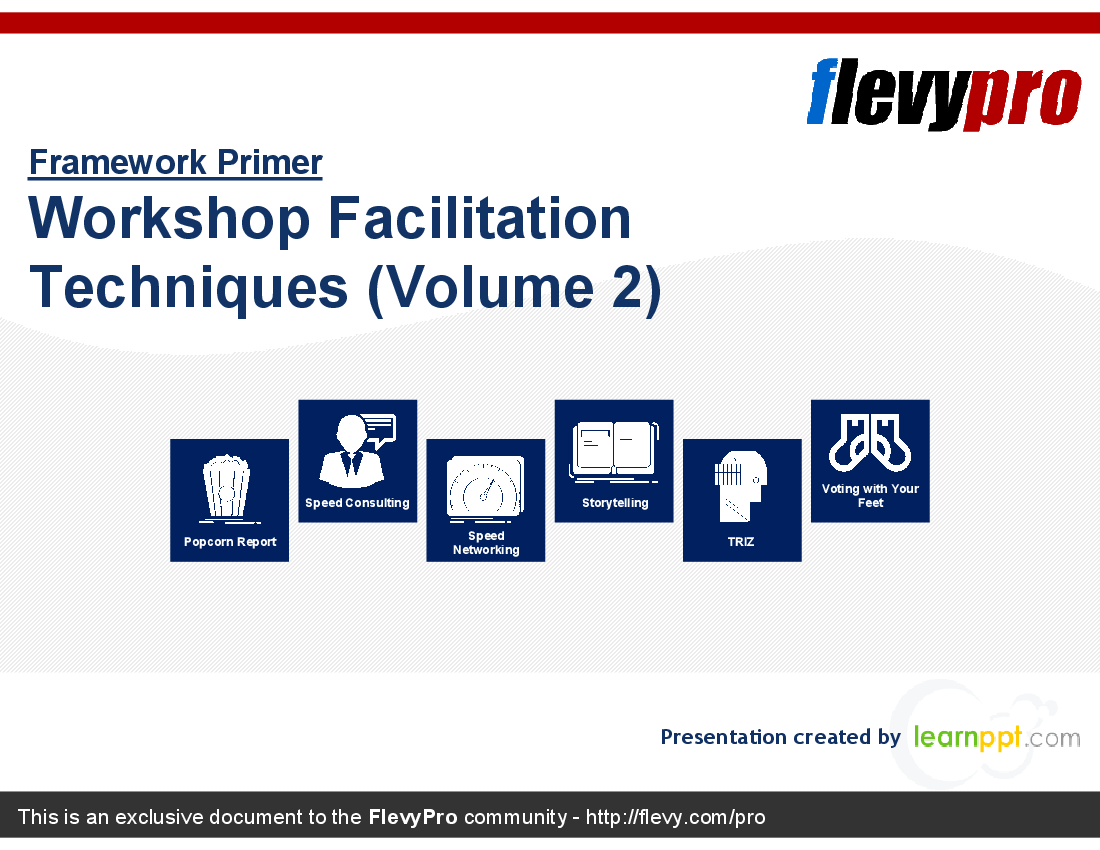
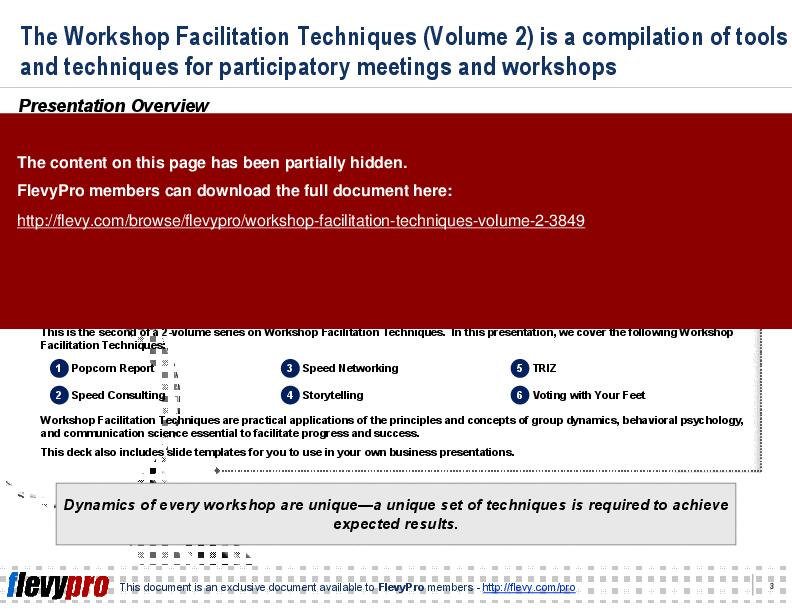
This is the second of a 2-volume series on Workshop Facilitation Techniques. In this presentation, we cover the following Workshop Facilitation Techniques:
1. Popcorn Report
2. Speed Consulting
3. Speed Networking
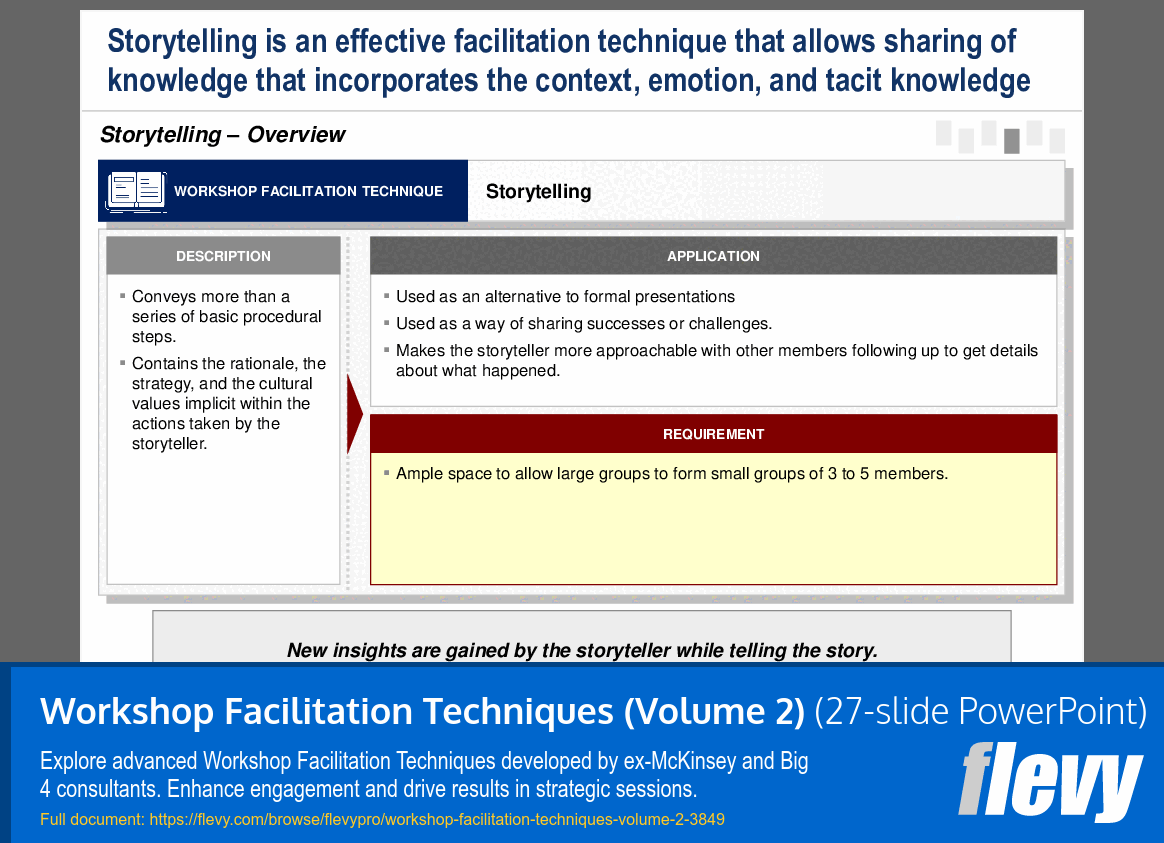
4. Storytelling
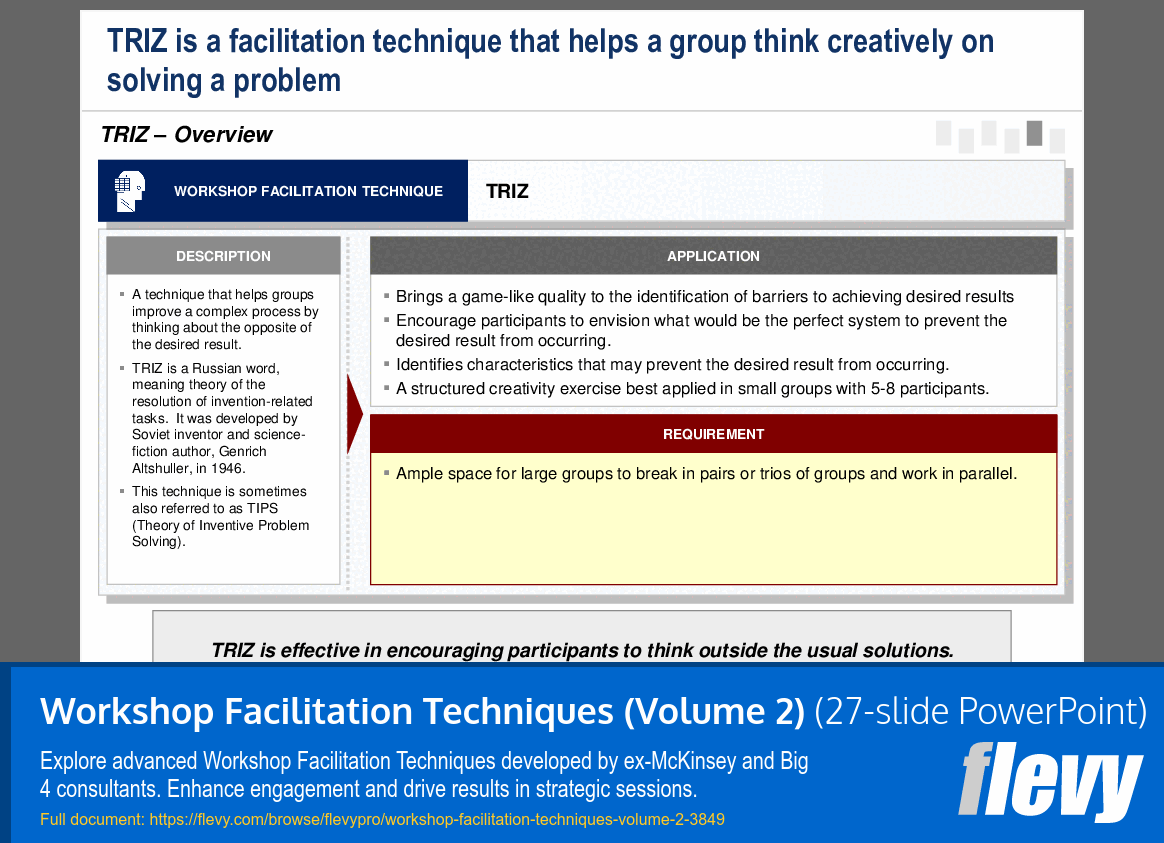
5. TRIZ
6. Voting with Your Feet
Workshop Facilitation Techniques are practical applications of the principles and concepts of group dynamics, behavioral psychology, and communication science essential to facilitate progress and success.
This deck also includes slide templates for you to use in your own business presentations.
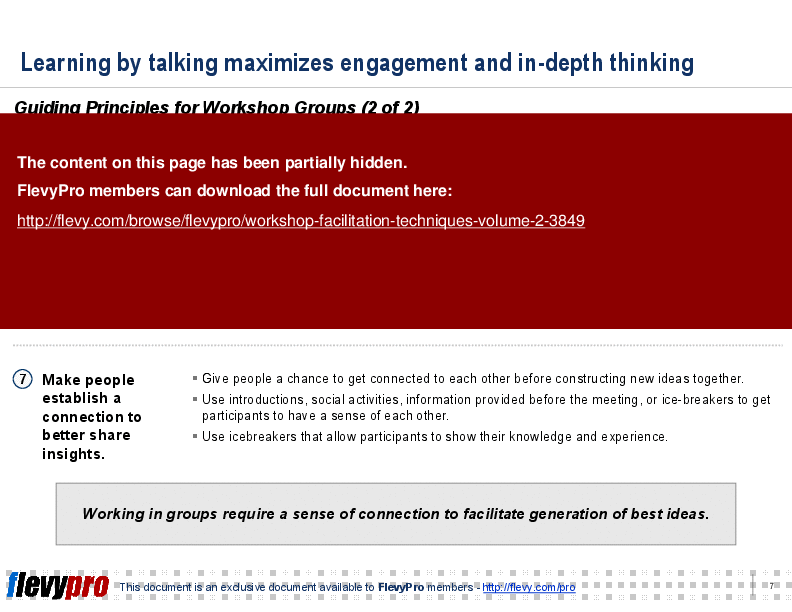
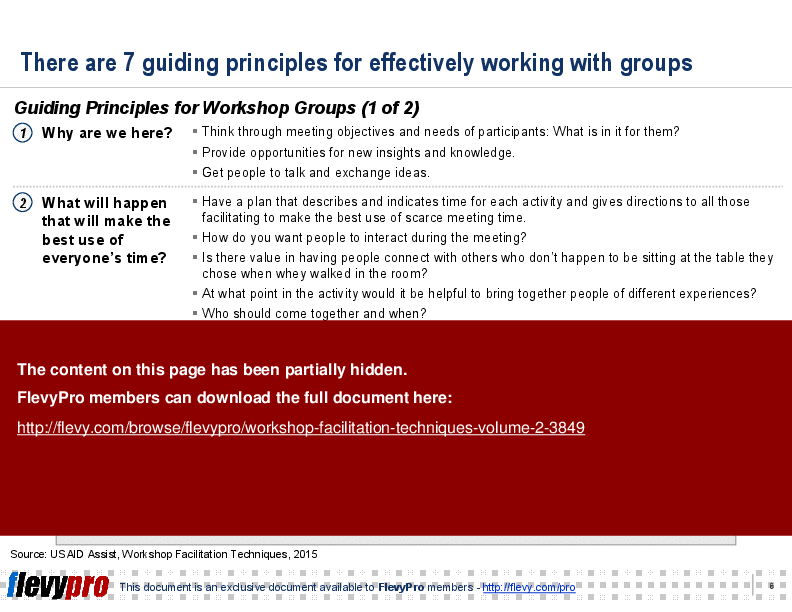
This volume offers seven guiding principles for effectively working with groups, ensuring optimal use of time and engagement. It also provides detailed steps for each technique, making it easy to implement and facilitate dynamic workshops.
Got a question about this document? Email us at flevypro@flevy.com.
Executive Summary
The Workshop Facilitation Techniques (Volume 2) presentation provides a comprehensive toolkit for enhancing participatory meetings and workshops. Developed by experienced facilitators, this resource equips corporate executives and consultants with advanced techniques to foster engagement, drive collaboration, and achieve strategic objectives. By mastering these facilitation techniques, users can effectively harness group dynamics to address complex challenges and generate innovative solutions.
Who This Is For and When to Use
• Corporate executives leading strategic planning sessions
• Consultants facilitating workshops for client engagements
• Team leaders aiming to improve meeting effectiveness
• HR professionals conducting training and development sessions
Best-fit moments to use this deck:
• During strategic planning workshops to ensure active participation
• In problem-solving sessions where diverse input is crucial
• When introducing new initiatives that require stakeholder buy-in
• For team-building activities aimed at enhancing collaboration
Learning Objectives
• Define the role of facilitation in achieving workshop objectives
• Build engagement strategies that encourage participant input
• Establish a framework for managing group dynamics effectively
• Identify and apply various facilitation techniques to enhance discussions
• Create a structured approach to synthesizing participant feedback
• Develop skills to navigate challenging group behaviors
Table of Contents
• Overview (page 3)
• Guiding Principles (page 6)
• Workshop Facilitation Techniques (page 9)
• Templates (page 21)
Primary Topics Covered
• Overview of Workshop Facilitation - Introduction to the importance of facilitation in managing group dynamics and achieving objectives.
• Guiding Principles - Key principles that enhance the effectiveness of group discussions and participant engagement.
• Popcorn Report - A technique for eliciting spontaneous feedback from participants to capture key insights.
• Speed Consulting - A method for generating actionable advice through peer-to-peer interactions in a fast-paced format.
• Speed Networking - An approach to facilitate idea exchange among participants, promoting energy and engagement.
• Storytelling - A technique that allows participants to share experiences, fostering connection and deeper understanding.
• TRIZ - A creative problem-solving technique that encourages thinking outside conventional solutions.
• Voting with Your Feet - A dynamic method for gauging participant sentiment on key issues through physical movement.
Deliverables, Templates, and Tools
• Workshop facilitation templates for structured planning and execution
• Feedback synthesis frameworks to capture and analyze participant input
• Engagement activity guides for implementing facilitation techniques
• Visual aids for illustrating facilitation concepts and methods
Slide Highlights
• Overview slide outlining the importance of facilitation techniques
• Guiding principles slide emphasizing best practices for group engagement
• Detailed breakdown of each facilitation technique with application scenarios
• Visual representations of participant engagement strategies
Potential Workshop Agenda
Introduction to Workshop Facilitation (30 minutes)
• Discuss the importance of facilitation in achieving objectives
• Introduce key guiding principles for effective workshops
Facilitation Techniques Deep Dive (90 minutes)
• Explore each technique: Popcorn Report, Speed Consulting, Speed Networking, Storytelling, TRIZ, Voting with Your Feet
• Engage participants in practical exercises to apply techniques
Feedback and Reflection Session (30 minutes)
• Synthesize insights from the workshop
• Discuss how to implement learned techniques in future sessions
Customization Guidance
• Tailor the agenda to fit specific organizational needs and objectives
• Adjust the techniques based on participant demographics and preferences
• Incorporate organizational terminology and frameworks into templates
Secondary Topics Covered
• Techniques for managing difficult group dynamics
• Strategies for fostering inclusivity in discussions
• Methods for evaluating the effectiveness of facilitation
Topic FAQ
Document FAQ
These are questions addressed within this presentation.
What are Workshop Facilitation Techniques?
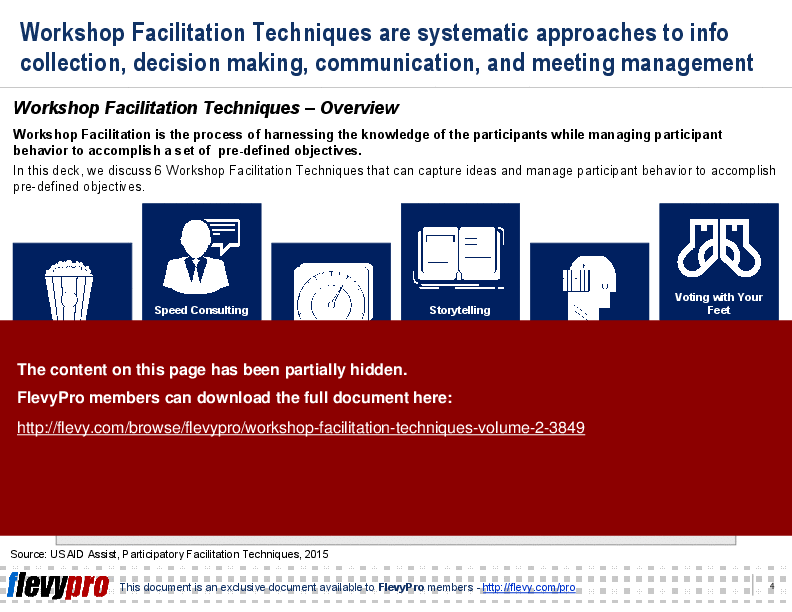
Workshop Facilitation Techniques are systematic approaches designed to enhance participant engagement, idea generation, and decision-making during meetings and workshops.
How can I implement these techniques in my organization?
Utilize the templates and frameworks provided in this deck to structure your workshops and adapt the techniques to fit your specific context and objectives.
What is the Popcorn Report technique?
The Popcorn Report is a facilitation method that encourages participants to share insights spontaneously, promoting a dynamic exchange of ideas.
How does Speed Consulting work?
Speed Consulting involves small groups providing rapid, actionable advice to a participant facing a specific challenge, fostering collaborative problem-solving.
What is the purpose of Speed Networking?
Speed Networking aims to energize participants and facilitate the exchange of ideas through structured, brief conversations on provocative questions.
How can storytelling enhance workshops?
Storytelling allows participants to share personal experiences, fostering deeper connections and insights that enrich group discussions.
What is TRIZ and how is it applied?
TRIZ is a creative problem-solving technique that encourages participants to think about the opposite of desired outcomes, helping identify barriers and innovative solutions.
What does Voting with Your Feet entail?
Voting with Your Feet is a technique where participants physically position themselves to express agreement or disagreement with a statement, providing immediate feedback on group sentiment.
Glossary
• Facilitation - The process of guiding a group to achieve its objectives through structured interactions.
• Engagement - The level of participation and involvement of attendees in discussions and activities.
• Group Dynamics - The behavioral and psychological processes that occur within a group setting.
• Popcorn Report - A technique for eliciting spontaneous feedback from participants.
• Speed Consulting - A method for generating actionable solutions through peer interactions.
• Speed Networking - A technique for facilitating quick exchanges of ideas among participants.
• Storytelling - Sharing personal narratives to foster connection and understanding.
• TRIZ - A creative problem-solving technique that encourages unconventional thinking.
• Voting with Your Feet - A method for gauging participant sentiment through physical movement.
• Templates - Pre-designed frameworks to assist in planning and executing workshops.
• Synthesis - The process of combining insights from discussions to form a cohesive understanding.
• Feedback - Information provided by participants about their experiences and insights during workshops.
Source: Best Practices in Workshop, Facilitation PowerPoint Slides: Workshop Facilitation Techniques (Volume 2) PowerPoint (PPT) Presentation Slide Deck, LearnPPT Consulting
Did you need more documents?
Consider a FlevyPro subscription from $39/month. View plans here.
For $10.00 more, you can download this document plus 2 more FlevyPro documents. That's just $13 each.
This document is available as part of the following discounted bundle(s):
Save %!
Facilitation Essentials
This bundle contains 4 total documents. See all the documents to the right.

|
Download our FREE Organization, Change, & Culture, Templates
Download our free compilation of 50+ slides and templates on Organizational Design, Change Management, and Corporate Culture. Methodologies include ADKAR, Burke-Litwin Change Model, McKinsey 7-S, Competing Values Framework, etc. |